Grab bars save lives.We train the people who install them.
A national standard for a trade that never had one — because the bar has to hold when it matters most.
The need for a grab bar usually starts withsomething small.
A hand reaching for a wall that wasn't needed last year. A piece of furniture that's become a handhold. A step that isn't quite steady.
Your mother leaned on the railing a little harder going down the front steps than she used to. She saw you watching. Neither of you said a word.
Your husband started sitting down to put on his shoes. Then he started bracing against the wall to get into the tub. He hasn't asked for help yet. You're not sure he would.
Last winter you caught yourself on the towel bar stepping out of the shower. It held, but it moved and felt like it was close to coming loose. You stood there for a second, heart pounding, and thought: that's not what towel bars are for.
You noticed. That's how it starts. Not with a fall — with a feeling.
And once you decide it's time, the next question is the same for everyone: who do you trust to get it right?
A clean install looks simple.Doing it right, isn't.
You wouldn't hire a handyman to install a gas line or wire a subpanel. Those jobs are trades for a reason — the stakes are too high for guessing.
Grab bar installation belongs in the same category. A finished bar looks simple. Getting it to hold — in whatever wall, whatever condition, whatever shape a real house throws at you — takes someone trained to account for all of it.
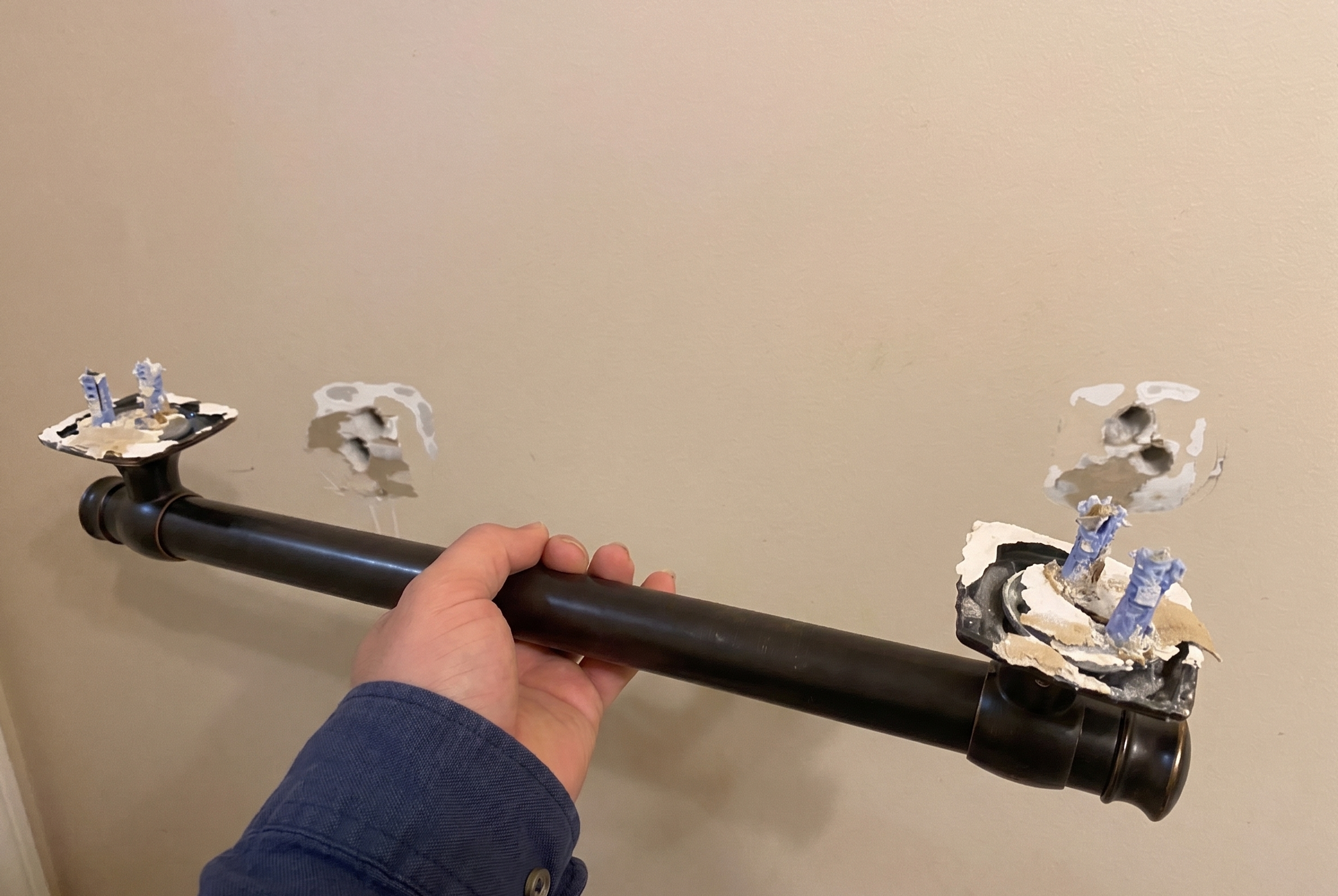
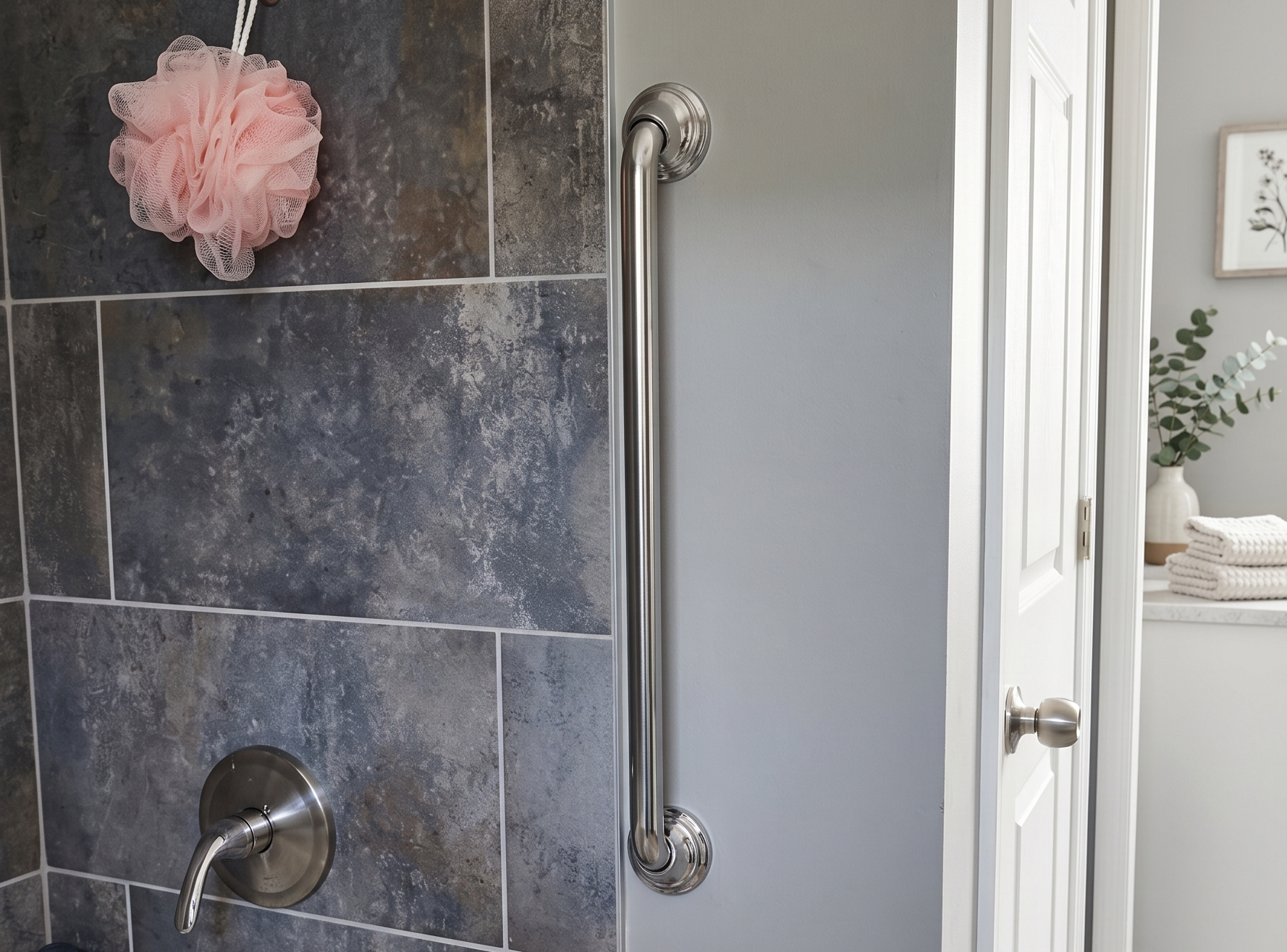
Both installs looked finished.
Only one of them was.
This is where the trade has been failing people.
Grab bar installation is one of the few pieces of home construction where doing the work wrong can directly put someone in the hospital. A deck railing, a load-bearing anchor, a bar that holds a body's full weight in a wet bathroom — these are life-safety installs, and they deserve to be treated that way.
But residential grab bars have never had a trade of their own. They get handed to whoever has time that week. A handyman. A remodeler squeezing it in. A contractor who's never been taught how to read a wall, pick the right anchor, or place the bar where it'll actually hold.
And the products are a maze of their own. Grab bars come in wildly different quality grades — and so do the anchors. Most people see a drywall anchor rated for fifty pounds and assume it'll hold a person. It won't. Those ratings are for light-duty, static loads like a picture frame — not a grown adult catching themselves mid-slip. A grab bar needs load-rated hardware into solid structure, and the real hardware for the job isn't sold at the hardware store. Those are specialty items, sourced by installers trained to know the difference. Once the install is finished, there's no way to tell from the outside which one you got.
The work looks finished. The check gets cashed. And the family goes on assuming the bar will hold.
Most of the time, it does. But "most of the time" is not the standard we think we're buying when someone we love is reaching for help in a wet bathroom at six in the morning.
That's why we startedGBIAA.
We're three people who couldn't stop thinking about it — coming at the same problem from three different angles.

Emilio has installed over a thousand grab bars in a twenty-plus year career without a single failure — and in every one of those years, he was also being called to fix bars that other installers had put in wrong. It was constant. The same problems, job after job: anchors in drywall that couldn't hold a body, bars placed where they couldn't help, walls nobody had actually assessed before drilling. People assumed grab bars were simple. Almost none of the installs he was called to fix had been. Wall construction, anchor selection, load-bearing technique — none of it was being taught to the people doing the work. For years it nagged at him, and for years he didn't have a way to fix it at scale. The trade needed a standard. He was going to help build one.

Liz brought the operational lens — and the view from the other end of the phone. She was often the one a family reached when they were trying to figure out who to trust with the install, and she kept hearing the same thing: "I don't know who to call. I don't even know if the right person exists." What she saw wasn't a hiring problem. It was structural. There weren't enough trained installers in the country to meet the need, and no system to help families find the ones who existed. Solving that required something bigger than a local practice.

Greg had spent years running nonprofits that partnered with hospitals, aging-in-place programs, and groups like Meals on Wheels and Rebuilding Together. Every week he watched patients get discharged from the hospital back into homes that were basically fall traps — and every week, the "fix" was a well-meaning volunteer, a handyman, or no one at all. The problem wasn't regional. It was national, running quietly through every discharge ward in the country. Good intentions weren't enough. The people who'd already been through the most were the ones being failed.
This isn't an idea.It's an organization.
GBIAA is live and growing. Here's what exists today.
The GBIAA certification turns installers into specialists. They learn to read walls the way a structural thinker does, pick anchors the way a trained installer does, and walk into any bathroom knowing they can make the bar hold. Not because they hope so. Because they were taught how.
When a family reaches out for help, a real person at GBIAA reads their request and responds personally. Not an auto-reply. Not a bot. Someone who understands the work, cares about the outcome, and will do what they can to help.
It's easier — and more humane — to prevent a fall than to treat one. GBIAA's advocacy work is about shifting the trade, and the systems around it, toward prevention. That means engaging with aging-in-place programs, home safety networks, insurance carriers, and the policymakers who shape what care looks like at home. Professional grab bar installation isn't a home upgrade. It isn't an accessory. It's life-safety work that keeps people out of the ER.
Two paths forward.
Pick the one that fits where you're standing.
Worried about a fall?
Whether it's for you or someone you love, we can help you figure out what's actually needed — and point you toward someone who can install it right. A real person reads every request.
Get Help from GBIAA Email our support team.Are you the one doing this work?
If you install grab bars — or you're ready to start — GBIAA exists to make you the person families can trust. Earn the credential, get matched with customers, and join the only community built around this work.
Learn About Membership Join the Free Community